
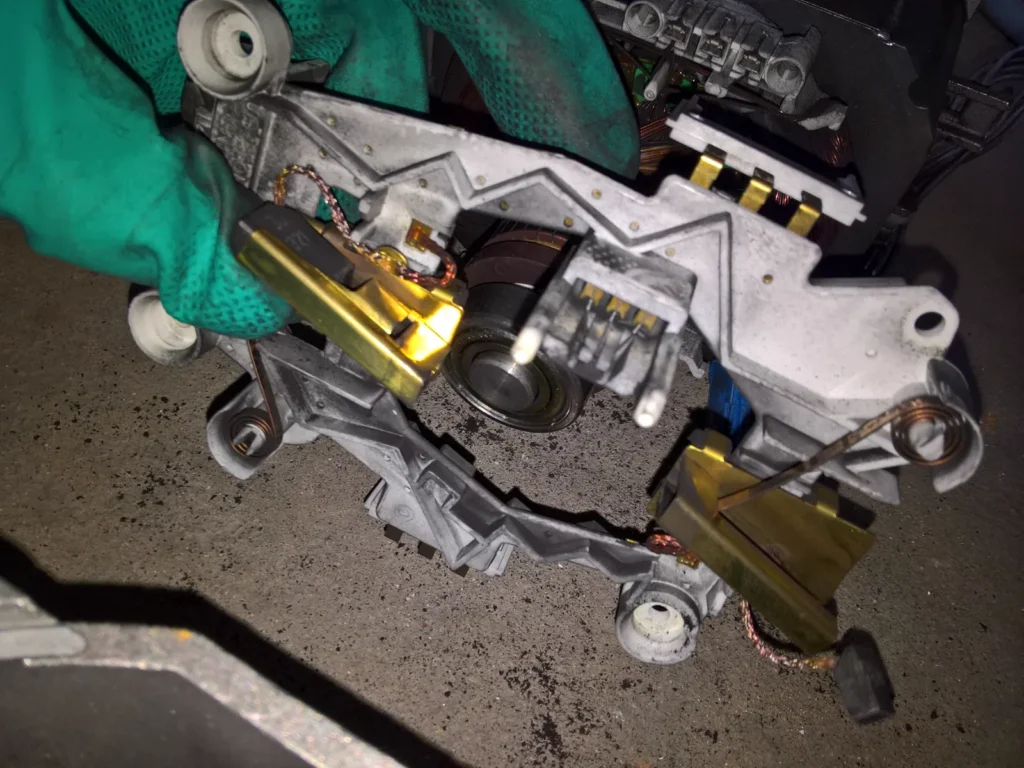
Electric motors and generators at the heart of modern industry work in a delicate balance to ensure uninterrupted and efficient energy flow. One of the most critical, yet often overlooked, components of these complex systems is the industrial carbon brush holder mechanism. Although it may look like a simple metal part, this component is actually a high-engineering product that has a direct impact on a machine's overall performance, lifespan, and reliability.
An incorrectly designed or incorrectly selected brush holder can cause energy losses, overheating, irreversible damage to commutator or slip ring surfaces, and ultimately costly production stoppages. As Ugur Karbon, aware of this vital role in industrial systems, we develop solutions that offer maximum efficiency even in the most demanding conditions. In this comprehensive guide, we will take an in-depth look at the world of industrial carbon brush holders, examining their structures, types, selection criteria, and key application areas in the industry in detail.
Information About Industrial Carbon Brush Holders
In basic definition, an industrial carbon brush holder is a mechanical assembly that holds the carbon brush in the correct position and at ideal pressure to ensure the transfer of electrical current between the fixed part (stator) and rotating part (rotor) of an electric motor or generator. It guarantees that the carbon brush makes continuous and stable contact with the rotating commutator or slip ring (brush ring) surface. This continuous contact is essential for electrical current to be transmitted with minimum loss and with arc (spark) formation minimized.
The importance of this mechanism is not limited to just holding the brush in place. It also undertakes critical tasks such as compensating for the wear allowance of the carbon brush, dampening vibrations occurring during operation, and applying optimal mechanical pressure on the brush. Ideal pressure is of vital importance for the efficiency of the system. Low pressure leads to weak contact between the brush and rotating surface, causing excessive sparking and energy loss, while excessive pressure leads to rapid wear of both the carbon brush and commutator surface. Therefore, the industrial carbon brush holder is not a passive component but a dynamic part of the system, optimized by Ugur Karbon engineering for the most demanding conditions.
Industrial Carbon Brush Holder Details
The effectiveness of an industrial carbon brush holder system depends on the quality of the components that make it up, the material selection, and the suitability of the design to the operating conditions. These details directly affect the overall performance and lifespan of the system. A successful brush holder is a precise product that brings together many engineering disciplines.
Structural Components and Materials Used
Every brush holder consists of key components that perform specific functions. The material selection of these components determines the electrical and mechanical properties of the holder.
Body (Brush Housing): This is the main part in which the carbon brush moves. It is generally manufactured from materials such as brass, bronze, or stainless steel due to properties such as high conductivity, corrosion resistance, and mechanical durability. The smoothness of its surface and dimensional precision are critical for the brush to be able to move freely without getting stuck.
Pressure System: This is the mechanism that ensures the brush presses against the commutator or slip ring surface continuously and with constant force. The most common systems are coil (helical) springs and constant-force (clock spring type) springs. Constant-force springs provide more stable performance by ensuring the pressure remains almost unchanged as the brush wears and are frequently preferred in modern applications.
Pressure Finger or Arm: The part that directly transmits the force received from the spring to the carbon brush. The design of this part must ensure that the pressure is distributed evenly across the brush surface.
Connection Terminals and Cables: These are the conductors that carry electrical current to or from the brush. These connections must have low resistance and be mechanically robust to prevent heating and energy loss.
Industrial Carbon Brush Holder Features
A quality industrial carbon brush holder must have a number of distinguishing features. These features directly affect not only immediate performance but also the long-term health of the system and maintenance costs.
Optimal and Constant Pressure Application
The most fundamental feature of a good brush holder is its ability to keep the pressure constant within a certain tolerance range even as the carbon brush wears. Constant-force spring systems used by Ugur Karbon perform superbly in this regard. Constant pressure supports the formation of a regular film (patina) layer on the commutator surface, which reduces friction and electrical wear.
High Mechanical Stability and Vibration Damping
Industrial environments can inherently be highly vibration-prone. The brush holder must be able to maintain its position under these vibrations and prevent brush bouncing. Brush bouncing leads to intense arcing and serious damage to both the brush and commutator surface. A robust body structure and precisely machined brush housings provide this mechanical stability.
Low Electrical Resistance and Heat Management
The brush holder body and connection elements must show minimum resistance to electrical current. High resistance causes heating known as I2R losses. This heat can deteriorate the properties of both the brush and the spring, shortening the system's life. Quality material selection and reliable electrical connections are essential for efficient heat management.
Industrial Carbon Brush Holder Application Areas
Industrial carbon brush holder systems play a critical role in almost every sector where electric motors and generators are used. This wide range of applications has made it necessary to develop designs customized to the unique requirements of different industries.
Energy Generation: Used in the excitation systems of massive generators in thermal, hydroelectric, and nuclear power plants. Here, reliability and uninterrupted operation are of vital importance.
Iron, Steel, and Rolling Mills: The massive DC motors driving rolling mills represent the most demanding environments with extreme current, high temperature, and mechanical shocks. Brush holders in these motors must demonstrate the highest level of durability.
Rail Systems and Transportation: The traction motors of trains, metros, and trams operate under constant vibration, impact, and variable weather conditions. Robust brush holders specially designed for these applications are used.
Cement and Mining: Large motors driving crushers, grinders, and conveyor systems are located in dusty and abrasive environments. The sealing and corrosion resistance properties of brush holders come to the fore in these environments.
Paper and Plastics Industry: In applications requiring precise speed control, such as winding and cutting motors on production lines, high-quality holders are needed since stable brush performance is critical for product quality.
Use of Carbon Brush Holders in Wind Turbine Slip Ring Systems
Wind energy plants (WEP) are one of the most important areas of modern energy production. Slip rings (brush rings) and brush mechanisms are used in the systems that adjust the blade angle (pitch control) of wind turbines and transmit the generated energy down the tower. Industrial carbon brush holder 2025 trends show that there is an increasing demand in this field.
Adaptation to Demanding Environmental Conditions
Wind turbines are generally installed in offshore or high-altitude locations where harsh weather conditions prevail. These environments mean high humidity, salt mist, extreme temperature changes, and vibration. Brush holders developed by Ugur Karbon for wind turbines have special corrosion-resistant coatings, stainless steel components, and sealing elements.
Low Maintenance Requirement and Long Life
Performing maintenance in a tight space (nacelle) at the top of a wind turbine is both difficult and costly. For this reason, all components used here must have maximum lifespan and minimum maintenance requirements. Brush holders manufactured from high-quality materials with constant-force springs extend brush replacement intervals and minimize the risk of unplanned downtime.
Industrial Carbon Brush Holder for Heavy-Duty DC Motors in the Iron-Steel Industry
Iron and steel plants represent one of the most unforgiving environments for industrial machines. The massive DC motors used in rolling mills operate under loads that instantaneously reach many times their nominal current. These conditions are the most demanding test environment for industrial carbon brush holder systems.
Resistance to Excessive Current and High Temperature
Sudden loads occurring during the rolling process cause currents of thousands of amperes to pass through motor brushes and holders. This brings the risk of overheating. Brush holders designed for these applications are generally made from heat-resistant bronze alloys and have larger cross-section bodies and connections to increase current carrying capacity.
Vibration and Mechanical Stress Management
The steel rolling process creates intense mechanical shocks and vibrations. The brush holder must not loosen, break, or fail to hold the brush stably under these vibrations. For this reason, double-arm or reinforced body structures and high-strength fasteners are generally used.
Brush Holder Applications in Rail Systems (Train, Metro) Traction Motors
Traction motors used in rail systems are the primary power unit that enables a vehicle's movement. The reliability of these motors is directly related to operational safety and efficiency. Brush holders are one of the most critical maintenance items in these motors.
Mechanical Robustness Against Continuous Vibration and Impacts
The continuous vibration a train is exposed to while moving along rails and the impacts during switch crossings create serious mechanical stress on the traction motor and therefore the brush holder. For this reason, traction motor brush holders are extremely robust and compact designs, generally manufactured from cast or forged bronze.
Stable Performance in Different Weather Conditions
Traction motors are exposed to every kind of weather condition, from extreme summer heat to winter snow and ice. The brush holder and pressure system are expected to maintain their properties and show stable performance over this wide temperature range. Material selection and design are made to tolerate these thermal expansion and contraction effects.
Carbon Brush Holder Applications for Generators in Power Plants
Generators in large-scale power plants feed a country's electrical grid. Even the smallest failure in these systems can lead to chain effects. Slip rings and brush holders used in the excitation systems of generators must therefore have the highest reliability standards.
High Reliability and Continuous Operation Requirement
Generators operate for months, even years without stopping, except during maintenance periods. In this process, even the slightest drop in brush holder performance is unacceptable. Multiple brush configurations are generally used for these applications. This makes it possible to check and replace individual brushes even while the motor is running, ensuring system continuity.
The Critical Role of Correct Pressure Adjustment
Generator slip rings are generally precision components with large diameter and high peripheral speed. Incorrect pressure applied by the brush holder can cause grooves (grooving) to form or burning on the surface of these slip rings. Repairing such damage is extremely costly. Therefore, using brush holders that provide precise and reliable pressure adjustment is a necessity.
Industrial Carbon Brush Holder Frequently Asked Questions (FAQ)
Below you can find frequently asked questions from our customers and field engineers about industrial carbon brush holder systems, along with the answers from Uğur Karbon experts.
1. Why is correct pressure in the brush holder so important? Correct pressure is critical for three fundamental reasons. First, it ensures current transmission efficiency; low pressure leads to arcing and energy loss. Second, it controls mechanical wear; excessive pressure quickly wears out both the brush and the commutator. Third, it supports the formation of a protective film layer (patina) on the commutator surface, which extends the system's life.
2. What is the lifespan of an industrial carbon brush holder? The brush holder itself is designed to last as long as the motor under correct operating conditions. However, springs can fatigue over time or housings can be damaged by excessive contamination and arcing. Cleaning insulators and checking spring pressure in periodic maintenance significantly extends the holder's life. Replacement is generally required in case of mechanical damage or loss of spring properties.
3. What are the main causes of excessive sparking (arcing) in the brush holder? Excessive sparking is generally caused by a combination of more than one factor. Main causes include: incorrect brush pressure (low or high), incorrect brush material selection, deterioration of the commutator surface (ovality, scratches), brush jamming in the housing, electrical failures (short circuits in windings, etc.), and the brush holder being in the wrong position.
4. Does Ugur Karbon manufacture custom brush holders for non-standard machines? Yes. One of Ugur Karbon's greatest strengths is its custom design and manufacturing capacity for customer needs. To improve the performance of an existing machine or to re-manufacture a brush holder that is no longer produced (obsolete), we work with our engineering team to offer solutions fully compatible with your machine's technical specifications and operating environment.
5. What are the main factors affecting 'Industrial Carbon Brush Holder 2025' year prices? The most important factors affecting prices are: current exchange rate costs of the material used (brass, bronze, stainless steel), the size and complexity of the holder, production quantity (custom manufacture vs. mass production), and the type of pressure system used (standard coil spring vs. constant-force spring). Quality material and precise craftsmanship more than cover the initial investment cost in the long run by reducing maintenance and downtime costs.


